← Return to Winners Showcase
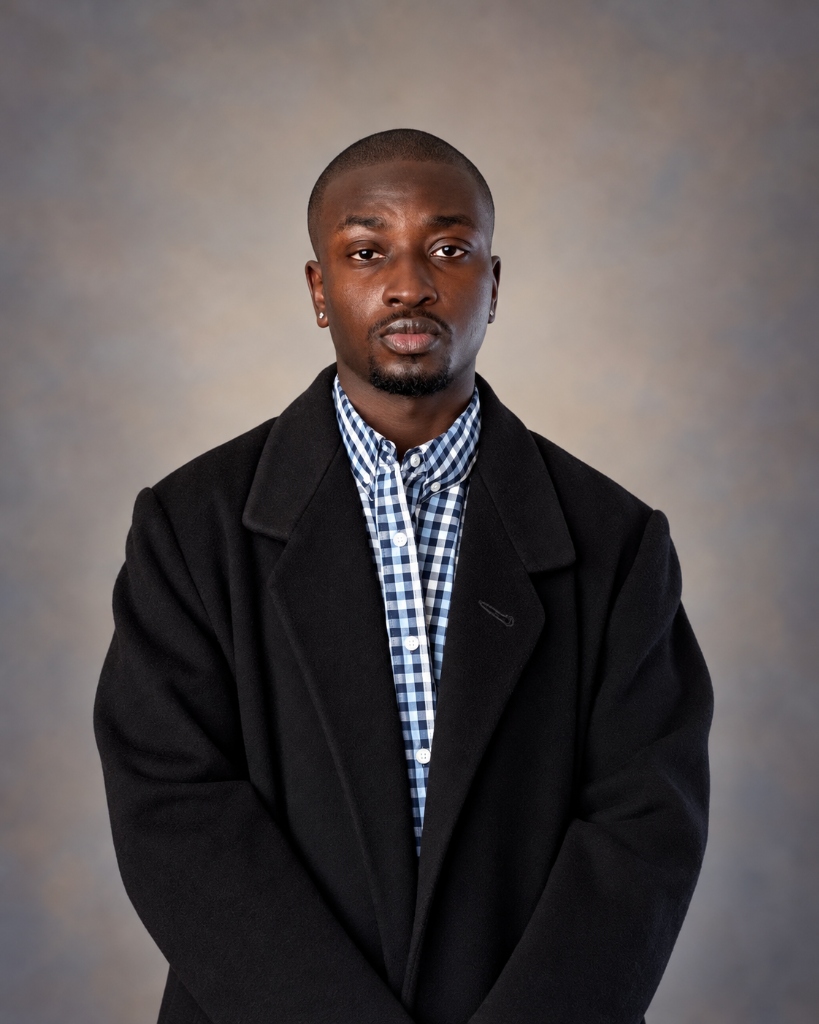
Ameen Animashaun

Photograph courtesy of the author

Overall Winner • ,000 Award

Ameen Animashaun

“Dog Fighting a Heron”

Complete Suite of 9 Poems • Nigeria / United States

“In Ameen Animashaun’s suite of poems we are introduced to a keen lyrical eye that refuses to separate the interiority of our being from the landscapes we trod on... His work moves the reader through a kind of syntactical arch, an arch that has the ability to bend our sense of time.”— Prof. Matthew Shenoda, Guest Judge
Poem 1 of 9

DOG FIGHTING A HERON

Whatever cleanness is supposed to be

is what called my name from the depth

of the waters. Its voice was a storm. It

whispered come, creator—kiss me

with your blood-wild teeth. It was

like touching the ruffled fur of violence

on a green September day; the air thin

in your nose, the tip of your fingers alive

with an electric wish; the sky breathing

its heavy breath upon you, like a blessing.

Like a sea, with its sand pulling it to shore,

then away from it, and then right back into it,

as if in a dance, unending. Stiletto finding

the warmth of flesh.

There is nothing

high above, or down below, more honest

than violence. Its ridged insides. Its carefree

hands swinging in the air, catching this,

and that, that, this, everything—all a song

serving itself, settling, first, into the mad

dog, its singular motivation being instinct.

What then comes after? What is it that survives

this mechanical disunity? Gold water, the voice says.

Gold water, and whatever remains of the animals.

Poem 2 of 9

ENCORE

What am I to say that I have

not already said? They say

there is more than a country, beyond

the borders, beyond reason

and reasoning. They say sit

with it; it being ease; ease

being mercy. I know how easy it is

to be merciful. I know, so I wait

for the bell to ring. I announce

that none of it matters, and the world

goes wild as if this is new

knowledge. The option is yes, the answer

is no. Briefly, briefly. I know

just enough to not take myself

too seriously under the investigative eyes

of the vines. I am there; I am

asking all the wrong questions.

Poem 3 of 9

THE SHIP OF THESEUS

Both of both. All of nothing. The morning

after, the wind charged towards time

and the trees and all the buried things

shook so much that the distance between

want and wanting became bare and reachable.

As in honesty taped against a brazen sky.

As in a war that has no aggressor—

no band of bleeding blades. It is easy

to take it all back, so, of course,

I take it all back. The blue splinter lodged

far from the borders of luck. The stones

and the glazed rocks. The lone nail at the core

of what I had foolishly believed

to be the center of the world. It is

an honest betrayal, the lord says.

Honest, like morning breath, sea water.

Like hellfire and everything else made up,

including you; including myself.

Poem 4 of 9

AT SEA

What drew me in was the ordinary

lives of the men at sea.

Their ordinary nets, and the ordinary

way that they approached the water;

their shadows

dancing

in the white sand as

they hurled their bodies

further forward, as if rushing

towards the constant call

of home. I wanted

what the men had. I wanted

to, like them, throw myself

into the open mouth of what

we will call

God,

and chase a storm that would end

up freeing me. I wanted

the freedom of the gulls, the seals, the herald

of hatchlings rushing towards instinct.

June brought rain, and soon,

the sea broke itself

into waves:

all the things with wings surrendered

themselves to the vast blanket that is the sky.

Then the long fall of silver showers. Then the blinding red

of the lighthouse hidden by fog.

Poem 5 of 9

THE EYE OF PROVIDENCE

Sweet, sour, then lost. All

lost, all sour, then sweet, then

lost. Highway snaking

into a lost forest. A fawn

snaking onto a naked road.

The road, a mind. Bells,

lost, belling. Sweet, sour.

It begins, highly. It ends,

Sweet. High, high. We

Begin. We snake. We eye.

We mercy. We moon.

Poem 6 of 9

LAMENTATION

Let’s pretend we are in a field. That it is June, 

and so, the field is green and brown, and the bed 

of sunflowers on the far end is turning its back

to God. Let’s pretend to walk a bit; to see a swan

at the center—no, two 

swans locked together at the neck, 

pecking at each other’s wings with the intention

of sowing in ruin. Let’s pretend to help; 

to get our hands dirty and clean up the ceremony 

of blood. Now, let’s pretend 

to pretend: we are in a field 

of wheat, and it is summer, so everything alive

is gravitating towards the same thing. At the center,

close to the bloodied swans, there are wolves 

black as a storm, circling. Let’s say 

this is how much we are privy to.

That the truth is that there is no field, and so, 

there are no swans, and the black wolves 

and the bloodied hands were just inside 

our heads. That we witnessed nothing,

and despite all that we did

not do, our hair remained on fire.

That, in the absence of everything, what remains 

is only the sound of something

circling, waiting for it all to begin again.

Poem 7 of 9

HARVEST

To try to grow joy inside

herself, the woman

tilling the field stops,

looks around with big,

dead eyes, before

shoving a handful

of dandelions

inside her mouth.

To try to figure out

the meaning of joy,

I stalked the woman

tilling the field,

hoping to bear

witness to what

it is that would

grow out of her

living mouth.

Poem 8 of 9

GLORY

Where all is glorious, the horses

are rushing into subways; kicking

and shoving each other with their

horse hands and legs. The birds bury

their guilts in the ground, make homes

out of nothing high up in the skies.

Happiness remains transactional;

the wolves remain notorious for what

the wolves have been notorious for.

Seasons begin again in reverse.

The sheep, shameless, wear cashmere

despite all they understand of violence.

The sinful ones are lost

in the field. The blue blanket

covering it all is still hiding

the blinding face of God.

Poem 9 of 9

ORDINARY, ORDINARINESS

In the absence of men, which,

at first,

seemed like the absence of force,

the children poked the horses

with sticks

as sharp as their tongues.

Battalion of brats, they marched

through the blades

of grass; the moisture soaked therein

the grass getting soaked

in the hem

of their pants.

The horses moaned. Some,

senseless with pain,

ran wildly into the distance,

mounds of muscles fighting off

a different kind

of fire.

There is so much that I remember,

but there is so much,

so much more, that I know

I am remembering wrong.

The field in my mind

is lifelessly brown.

If bent a certain way,

the smoke from the burnt horses

can be seen,

still,

rising westward

towards forgetfulness.